
Erasmus ROCKET Teacher Training
CVE is Not Distance Teaching
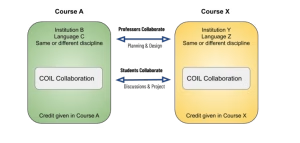
In the introduction module we have introduced Virtual Exchange (VE) and Critical Virtual Exchange (CVE). It is essential that you do not confuse VE with distance teaching. You typically run your VE project with a partner teacher at another institution. And each of you integrates the project in the teaching you provide. Students remain enrolled in the courses at each institution, and you and your partner colleague remain responsible for teaching these courses. You will also usually meet your students in class for activities in the course not shared with your partners. Assessment and credit allocation is by the teachers at either side of the VE project. With a distance course, this is different: students will be taking courses at another institution and this ‘host’ institution will assess their work, allocate credits and share these with the home institution.
A simple overview of the VE collaboration process is provided by the SUNY COIL Center, one of the first organisations to advance the practice of VE (under the term COIL – Collaborative Online International Learning):
For now, it suffices if you understand how VE works and how it differs from other forms of online learning. You will learn to apply it to your own courses later in this training, but if you are interested in finding out more about this methodology at this stage, you may check out this additional resource from the SUNY COIL Center: What is COIL?